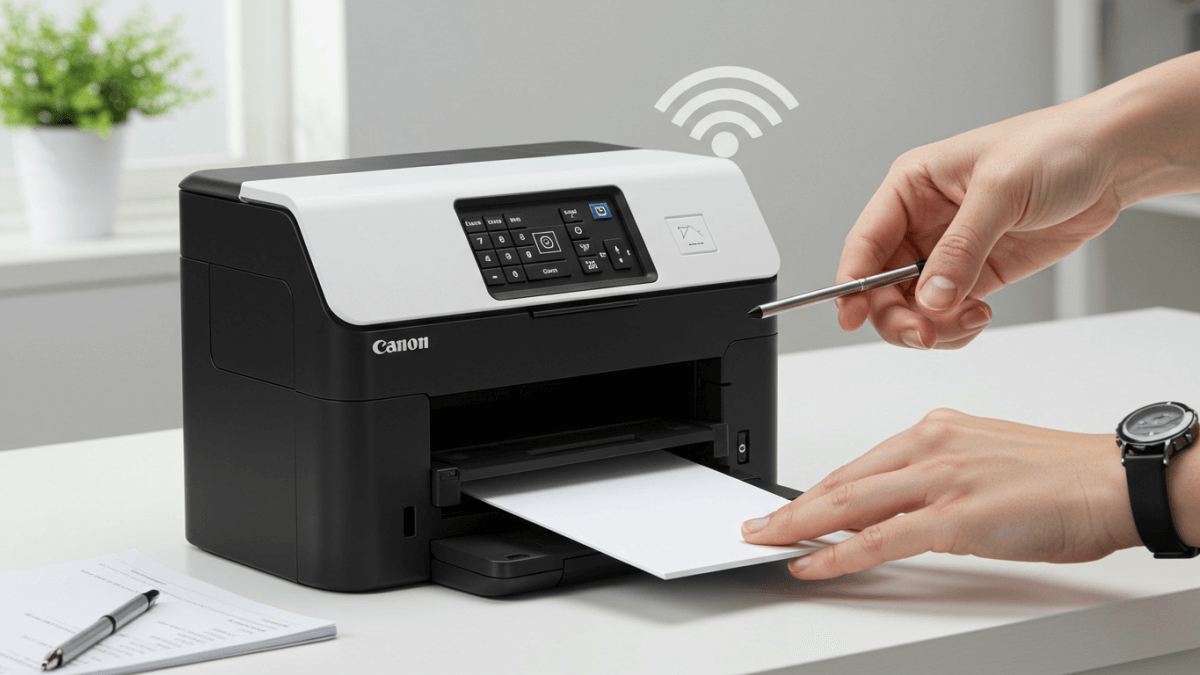
The Canon Printer Won't Connect to WiFi problem can occur when a mesh router uses wireless settings that are incompatible with the printer. Band steering, security modes, network isolation, and saved connection information can all affect printer connectivity.
If your Canon Printer Not Connecting to WiFi after installing a mesh system, this guide explains what may be causing the problem and how to restore wireless printing.
Why Won't My Canon Printer Connect to a Mesh WiFi Network?
Mesh networks use a main router and additional access points to provide wireless coverage throughout a home.
Unlike traditional routers, mesh systems may automatically manage wireless bands and device connections.
Common causes of Canon printer connection problems include:
The printer supports only 2.4 GHz WiFi.
The mesh system uses incompatible security settings.
The printer remembers an old wireless network.
Band steering affects the setup process.
The printer connects to an isolated guest network.
Wireless signals are unstable near the printer.
The computer cannot discover the printer.
The printer receives a different IP address.
Before changing mesh settings, determine whether the printer cannot join WiFi or is already connected but unavailable for printing.
1. Check 2.4 GHz WiFi Compatibility
Many Canon PIXMA printers use 2.4 GHz wireless networking, although supported frequencies vary by model.
Modern mesh systems often combine 2.4 GHz and 5 GHz under a single network name.
This is convenient for smartphones and laptops, but some older printers may have difficulty completing setup with certain router configurations.
Open your mesh system's network settings and check whether 2.4 GHz WiFi is enabled.
Some mesh systems offer a temporary compatibility mode for connecting older devices.
If available, enable that mode during printer setup.
Do not assume every Canon printer requires 2.4 GHz. Check your specific model's wireless specifications.
2. Review Mesh Router Security Settings
A Canon Printer WiFi Connection Failed message may appear when the mesh router uses an unsupported security configuration.
Some older Canon printers support WPA2 but cannot connect to WPA3-only networks.
Review the security standards supported by your printer.
If your mesh system offers a compatible encrypted security mode, choose the appropriate setting.
Avoid disabling wireless encryption or creating an unsecured network.
After reviewing the settings, restart wireless setup and attempt to connect the printer again.
3. Fix Canon Printer Can't Find WiFi
If your Canon Printer Can't Find WiFi, the mesh network may not be visible to the printer.
Start by moving the printer closer to the main mesh router.
Confirm that the intended wireless network is broadcasting and that a compatible wireless band is enabled.
If the mesh application offers an option to temporarily simplify the wireless configuration for older devices, consider using it.
Restart the printer and search for the network again.
If the network appears but the connection fails, focus on password and security compatibility rather than signal detection.
4. Reconnect the Printer After Replacing Your Router
If you replaced a traditional router with a mesh system, your printer may still remember the previous network settings.
Even if the new mesh network uses the same internet connection, its wireless credentials or security configuration may be different.
Open your Canon printer's wireless settings.
Select the current mesh WiFi network and enter the correct password.
For models without a touchscreen, use the model-specific wireless setup procedure.
If the printer continues trying to connect to an old network, consider resetting only its saved wireless settings.
A full factory reset is usually unnecessary.
5. Check Whether Mesh Band Steering Affects Setup
Mesh routers may use band steering to help compatible devices select an appropriate wireless connection.
Some printer setup processes can be affected by how the router advertises and manages its wireless bands.
If your mesh system provides a temporary 2.4 GHz onboarding option, try enabling it while connecting the printer.
Some systems may also allow temporary changes to band-steering behavior.
After setup, restore your preferred network configuration and confirm that the printer remains connected.
Remember that band steering is not always responsible for printer connection failures.
6. Fix Canon Printer Not Connecting to Router
A Canon Printer Not Connecting to Router problem may involve authentication or network configuration rather than the mesh system itself.
Verify that the printer is using the correct WiFi password.
Check whether device access restrictions or MAC address filtering are enabled.
If the router allows device blocking, confirm that your printer has not been restricted.
Restart the printer and main mesh router if necessary.
Avoid repeatedly resetting the printer before checking the network credentials and security settings.
7. Check Guest Network and Device Isolation
Your Canon printer may connect successfully to the mesh WiFi but remain invisible to your computer.
Some guest networks prevent connected devices from communicating with one another.
This can create a Canon Printer WiFi Not Working situation even when the wireless connection is active.
Check whether your printer and computer are connected to networks that permit local communication.
If the printer is connected to an isolated guest network, reconnect it to the appropriate home network.
Then attempt printer discovery again.
8. Check the Printer's IP Address
Mesh systems typically assign local IP addresses automatically.
If your printer receives a new address, an existing computer connection may stop working.
Print the printer's network information page if your Canon model supports it.
Find the assigned IP address and compare it with any manually configured printer address on your computer.
If the computer uses an outdated address, update or recreate the printer connection.
Advanced users can configure a DHCP reservation to keep the printer's IP address consistent.
This can improve printer availability but does not repair weak WiFi signals.
9. Add the Canon Printer Again on Windows or Mac
If your printer is connected to mesh WiFi but cannot print, the computer may have an outdated printer entry.
On Windows 11:
Open Settings.
Select Bluetooth & devices.
Choose Printers & scanners.
Select Add device.
Choose your Canon printer if it appears.
Complete installation.
On Mac:
Open System Settings > Printers & Scanners and add the available Canon printer.
If automatic discovery fails, check whether your model supports manual IP-based installation.
Frequently Asked Questions
Do Canon printers work with mesh WiFi systems?
Many Canon wireless printers work with compatible mesh networks. Successful setup depends on the printer's supported wireless bands, security standards, and network configuration.
Why won't my Canon printer connect to mesh WiFi with the correct password?
Incompatible wireless security, band settings, or outdated saved network information may prevent authentication.
Does my Canon printer need a separate 2.4 GHz network?
Not always. Many printers work with combined-band networks, but some mesh systems provide compatibility options that can help older devices complete setup.
Why does my Canon printer connect to mesh WiFi but appear offline?
The computer may have an outdated printer address, or network isolation settings may prevent communication.
Can mesh WiFi cause Canon printer disconnections?
Yes. Weak wireless coverage, interference, or certain network configurations can contribute to unstable connections.
Final Thoughts
A Canon Printer Won't Connect to WiFi problem after upgrading to a mesh network does not necessarily mean your printer is incompatible with modern wireless systems.
Start by checking the supported WiFi band, router security settings, and saved wireless credentials. If the printer connects but remains unavailable, investigate guest network isolation, IP address changes, and computer discovery settings.